India observed its 77th Republic Day 2026 on January 26, 2026, with the annual ceremonial parade held on Kartavya Path in New Delhi. The event followed established traditions and official protocols, reflecting constitutional values, military discipline, cultural diversity, and India’s evolving role in global affairs. The celebrations were conducted under tight security arrangements and were based on verified announcements by government authorities.
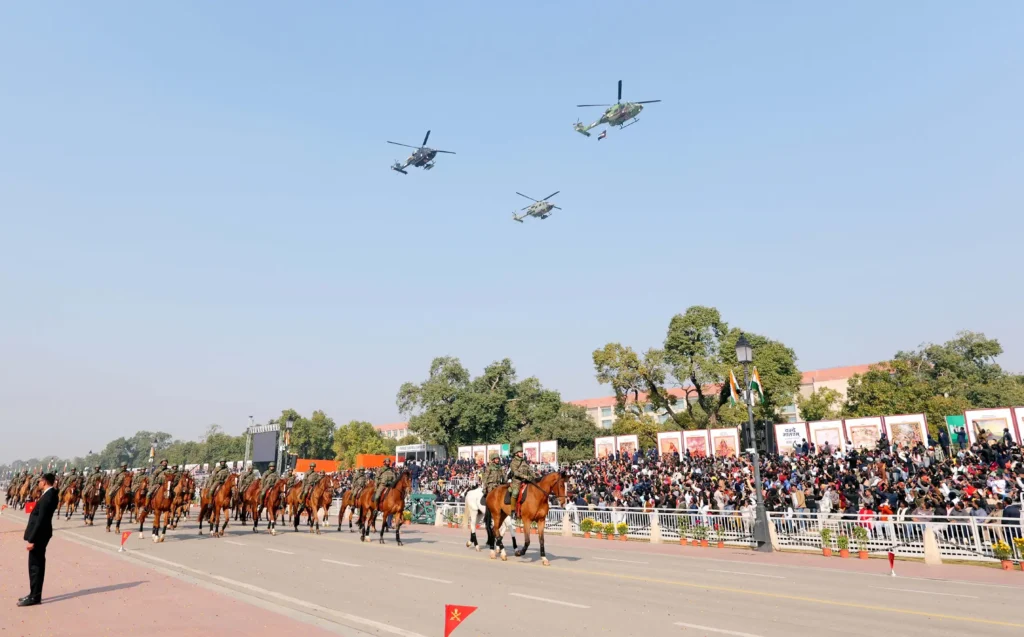
Image Source: PIB / Government of India
Republic Day marks the day when the Constitution of India came into force in 1950, formally establishing India as a sovereign democratic republic. Over the decades, the annual parade has become a platform to display the country’s constitutional commitment, defence preparedness, cultural heritage, and administrative continuity.
Ceremonial Proceedings at Kartavya Path
The main Republic Day ceremony took place along Kartavya Path, the ceremonial avenue in the national capital that connects Rashtrapati Bhavan and the National War Memorial. The location continues to carry symbolic importance, representing the link between constitutional authority and the sacrifices made by members of the armed forces.
Droupadi Murmu led the proceedings. She formally unfurled the national flag, followed by the playing of the National Anthem. A 21-gun salute was fired using 105 mm Light Field Guns, in keeping with standard military tradition.
Senior government officials, members of the diplomatic corps, armed forces leaders, and invited guests were present at the ceremony. The sequence of events adhered to the established Republic Day protocol, emphasizing continuity and institutional order.
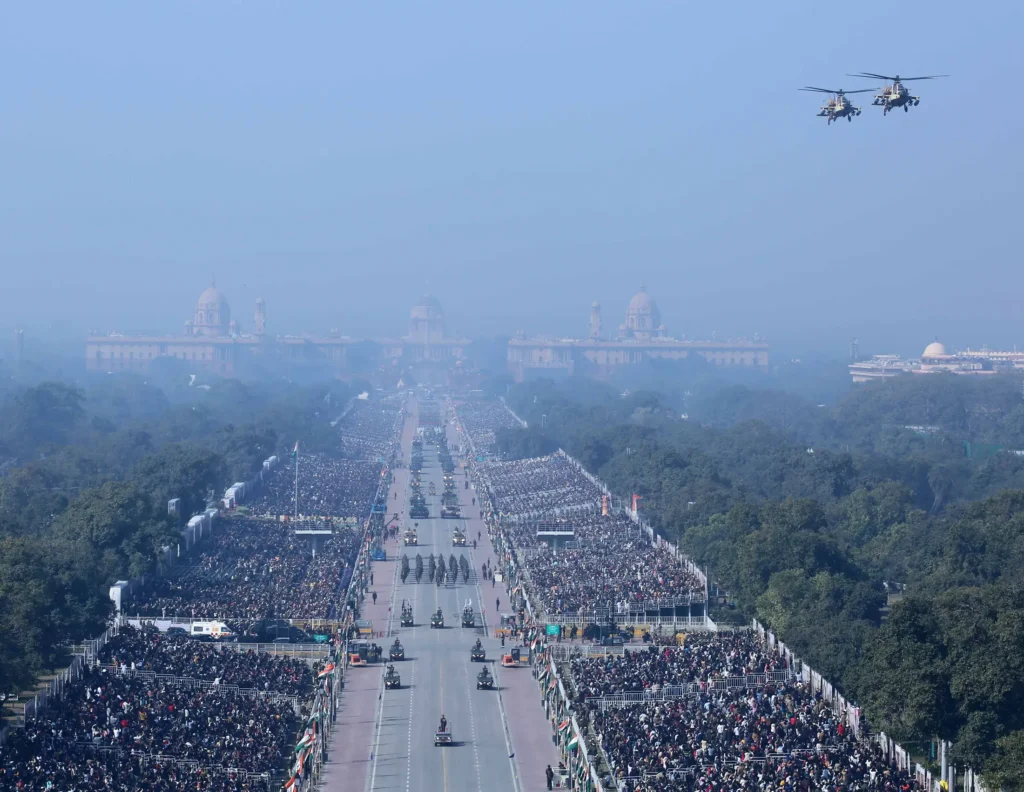
Image Source: PIB / Government of India
Ultimate Fighting Championship (UFC): Everything You Need to Know in 2025
International Guests and Diplomatic Context
Republic Day 2026 carried particular diplomatic significance due to the presence of senior leaders from the European Union. The chief guests for the occasion were António Luís Santos da Costa and Ursula von der Leyen.
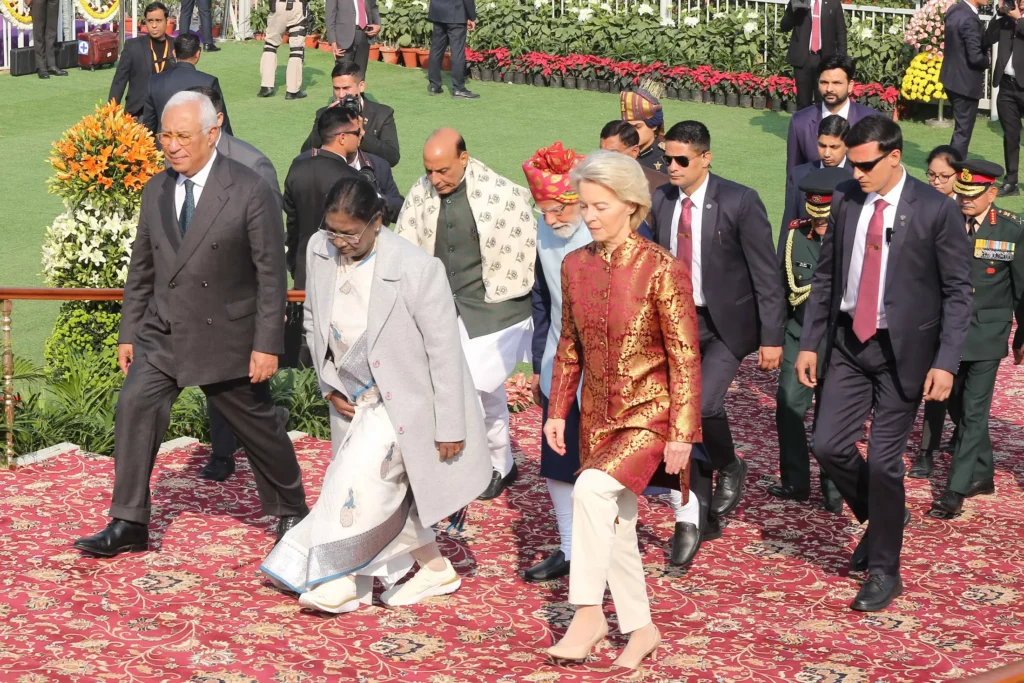
Image Source: PIB / Government of India
Their participation formed part of an official state visit announced earlier by the Ministry of External Affairs. Both leaders attended the parade together, an occurrence that was widely noted in diplomatic circles.
According to official statements, their visit coincided with an India–European Union summit held during the same period. Discussions during the visit focused on trade relations, investment, climate cooperation, technology partnerships, and global governance issues. The presence of both EU leaders at Republic Day was seen as a reflection of India’s engagement with major international partners.
Theme and Concept of the Republic Day 2026 Parade
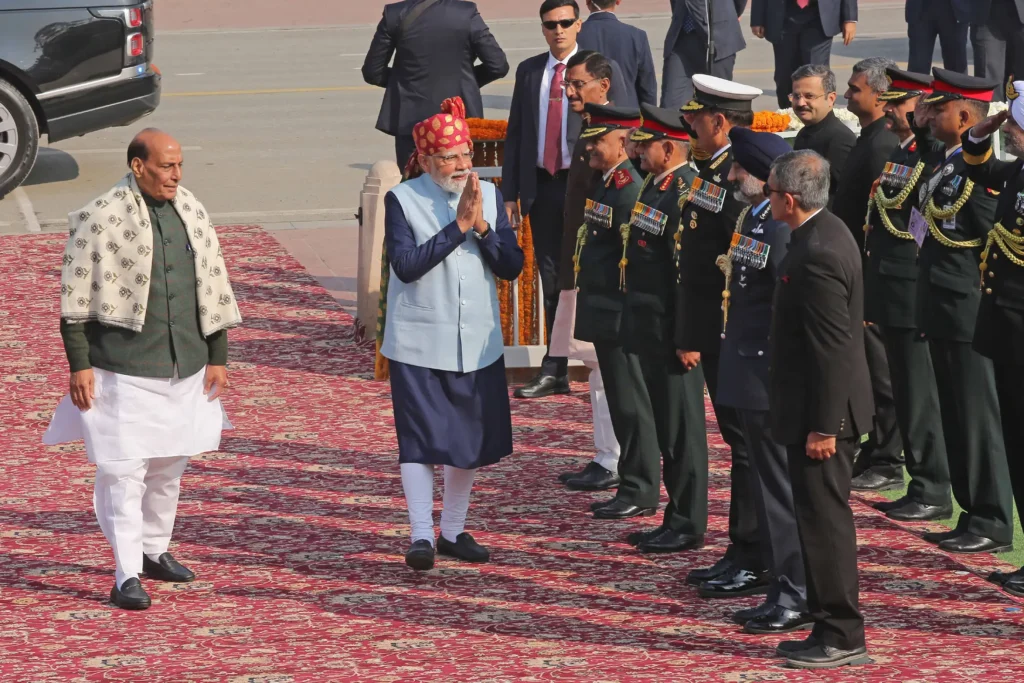
Image Source: PIB / Government of India
The central theme of the Republic Day 2026 parade focused on “150 years of ‘Vande Mataram’.” The theme highlighted the historical and cultural significance of the song, which has played an important role in India’s freedom movement and national identity.
In addition to the central theme, the parade also presented narratives related to India’s cultural heritage, social development, and technological progress. These themes were expressed through tableaux, marching contingents, and cultural performances.
Washington Sundar – The Calm Craftsman of Indian Cricket
Tableaux from States, Union Territories, and Ministries
A total of 30 tableaux were showcased during the parade. These included:
- 17 tableaux from States and Union Territories
- 13 tableaux from central Ministries and Departments
Each tableau represented a specific aspect of regional culture, traditional art forms, local innovation, or national development initiatives. Topics ranged from folk traditions and historical landmarks to infrastructure projects and social welfare programs.
The selection of tableaux followed a formal review process coordinated by the Ministry of Defence and associated expert committees. Proposals were evaluated on artistic quality, clarity of message, relevance to national themes, and logistical feasibility.
Military March and Defence Display
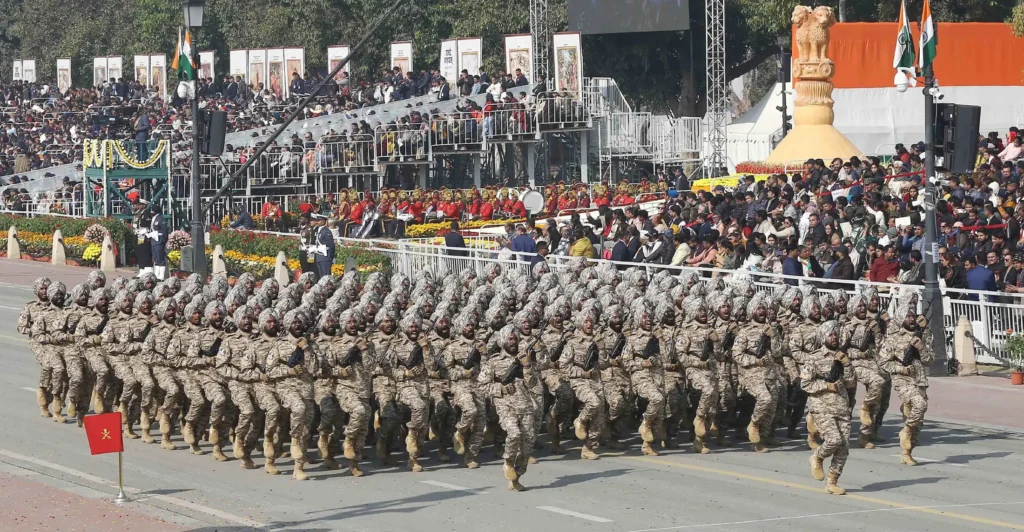
Image Source: PIB / Government of India
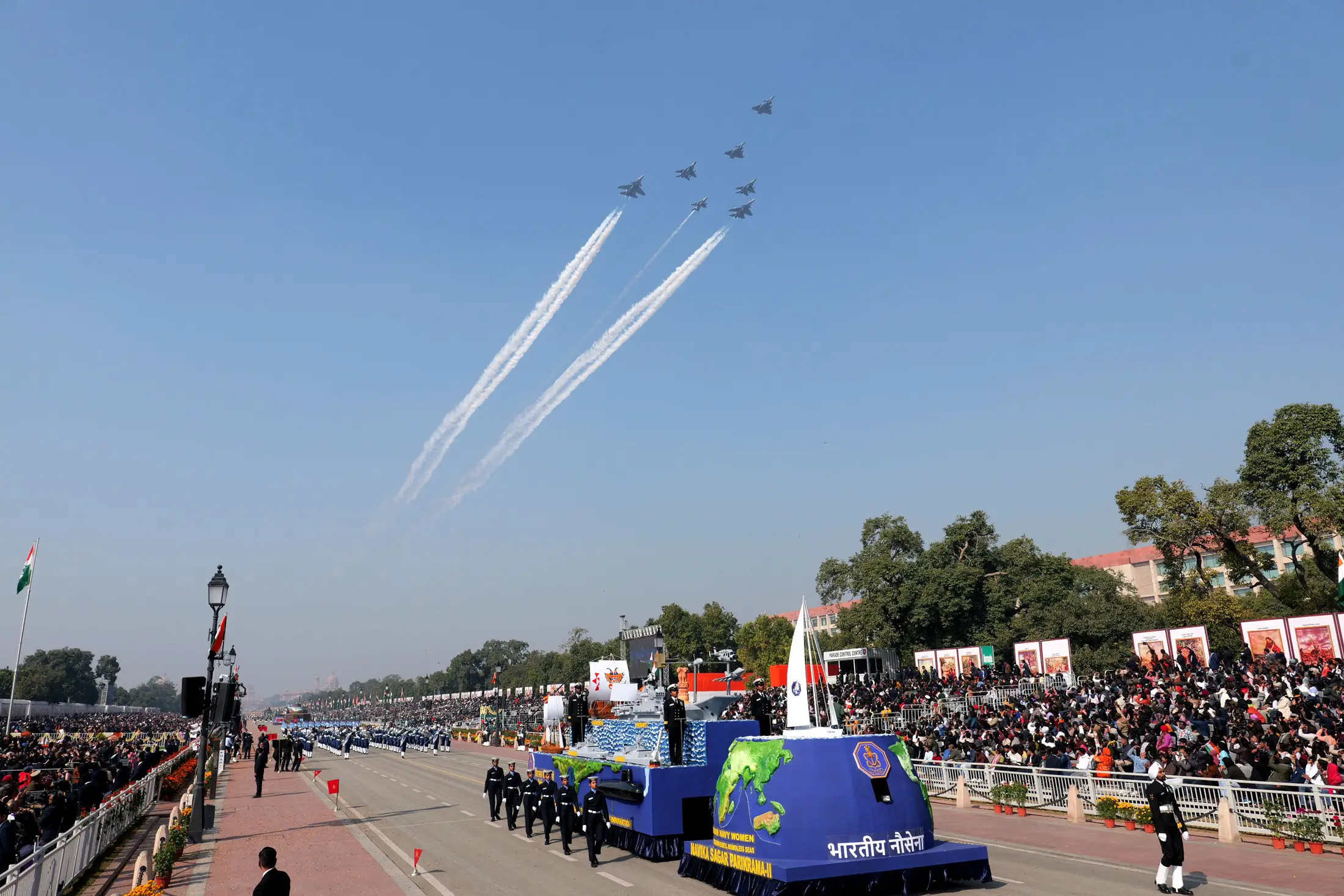
The military segment of the parade featured marching contingents from the Indian Army, Navy, Air Force, and various paramilitary forces. Personnel marched in disciplined formations, reflecting training standards and operational readiness.
Mechanised columns displayed tanks, artillery systems, and other defence equipment currently in service. Officials noted that the display included equipment developed or manufactured under India’s self-reliance initiatives in defence production.
The aerial segment included flypasts by Indian Air Force aircraft. Fighter jets and transport planes flew in coordinated formations over Kartavya Path. According to official briefings, the flypast was designed to demonstrate operational capability as well as the growing role of indigenous platforms in the air force inventory.
Gallantry Awards Announced on Republic Day Eve
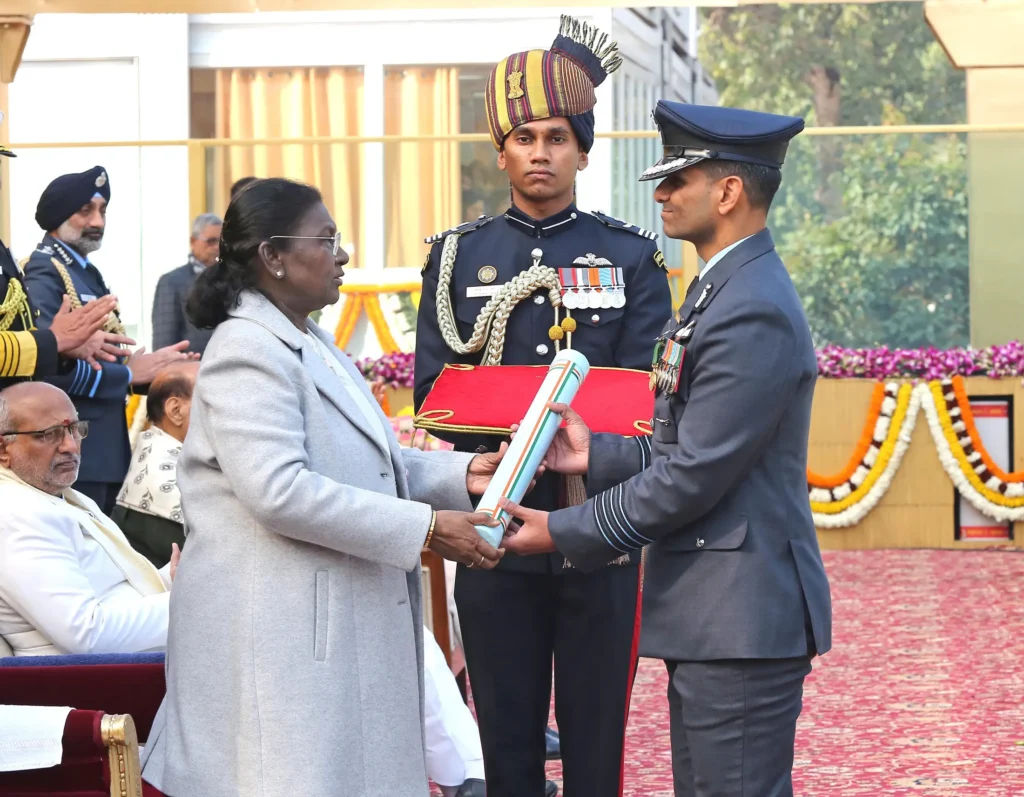
Image Source: PIB / Government of India
As per tradition, gallantry awards were announced on the eve of Republic Day. In 2026, the President approved 70 gallantry awards for personnel from the Armed Forces.
The awards included:
- 1 Ashoka Chakra
- 3 Kirti Chakras
- 13 Shaurya Chakras, including one posthumous award
- Several Sena Medals, Nausena Medals, and Vayu Sena Medals
The Ashoka Chakra, India’s highest peacetime gallantry award, was conferred on Group Captain Shubhanshu Shukla of the Indian Air Force. The citation released by the Ministry of Defence stated that the award recognized his contribution to a landmark space mission involving operations in low Earth orbit.
Official award lists and citations were made public through government notifications.
Cultural Performances and Artistic Participation
Cultural performances formed an integral part of the parade. Approximately 2,500 artists from across the country participated, presenting a mix of folk dances, traditional music, and contemporary artistic expressions.
The performances were designed to reflect India’s cultural diversity and artistic continuity. Organizers stated that care was taken to ensure balanced regional representation and adherence to time and security protocols.
Public Participation and “Jan Bhagidari”
Republic Day 2026 continued the emphasis on public participation through the “Jan Bhagidari” initiative. Around 10,000 special guests were invited to attend the parade in person.
These guests included individuals from various sectors such as education, healthcare, social service, and grassroots administration. The initiative aimed to broaden citizen engagement with national celebrations and recognize contributions made at the community level.
Security and Logistical Arrangements
The Republic Day celebrations were conducted under multi-layered security arrangements. Central and state security agencies coordinated to ensure crowd management, route security, and emergency preparedness.
Traffic diversions and public advisories were issued in advance by local authorities in New Delhi. According to official statements, the arrangements were designed to ensure safety while allowing smooth conduct of the event.
Observances Across India
While the main parade was held in New Delhi, Republic Day was observed across the country. State capitals, district headquarters, and local administrative units organized flag-hoisting ceremonies and parades.
Schools, colleges, and government offices marked the day with cultural programs, speeches, and community activities. National Cadet Corps and police units participated in local parades, following standard ceremonial procedures.
Historical and Constitutional Significance
Republic Day commemorates the coming into force of the Constitution of India on January 26, 1950. Although the Constitution was adopted on November 26, 1949, January 26 was chosen to honor the declaration of Purna Swaraj made in 1930.
The day 26 January 1950 marks India’s transition from colonial governance to a constitutional republic. Each year’s celebrations reaffirm the principles of democracy, rule of law, and institutional continuity enshrined in the Constitution.
Broader Message of Republic Day 2026
Republic Day 2026 conveyed a message of continuity rather than change. Domestically, the focus remained on constitutional values, recognition of service and sacrifice, and steady progress in governance, culture, and defence.
Internationally, the presence of senior European Union leaders highlighted India’s engagement with global partners and its role in international cooperation. Officials emphasized that such participation reflects long-term diplomatic relationships rather than symbolic gestures.
Conclusion
The Republic Day celebrations in 2026 followed established traditions while reflecting contemporary priorities. The parade at Kartavya Path combined ceremonial discipline, cultural representation, and defence preparedness within a framework defined by constitutional values.
The day concluded not merely as a public spectacle, but as a formal reaffirmation of the constitutional system that defines the Indian Republic.
Disclaimer
This article is based on information available in the public domain and multiple credible sources. It is published strictly for informational and educational purposes and does not intend to express any political, ideological, or personal opinion of The Viral Issues or its editorial team.”