What Is Bharat Taxi and Why It Matters
Bharat Taxi is India’s first cooperative-led ride-hailing platform created as an alternative to private aggregators. The focus keyword bharat taxi refers to a system where drivers are not treated as contractors but as owners of the platform itself.
- What Is Bharat Taxi and Why It Matters
- Cooperative Ownership and the Role of Drivers
- Pilot Phase and Early Response
- Services Available on Bharat Taxi
- Expansion Plans Across India
- How Bharat Taxi Differs From Private Ride-Hailing Apps
- Social and Community Initiatives
- Frequently Asked Questions
- 2. Who operates Bharat Taxi?
- 3. Does Bharat Taxi charge any commission from drivers?
- 4. Can drivers work on other ride-hailing apps along with Bharat Taxi?
- 5. Which types of vehicles are available on Bharat Taxi?
- 6. Is Bharat Taxi available across India right now?
- 7. What does “Sarathi” mean in Bharat Taxi?
- 8. How is Bharat Taxi different from private cab apps?
- 9. Does Bharat Taxi provide any social security benefits to drivers?
- 10. Why was Bharat Taxi launched?
- Conclusion
Unlike commercial ride-hailing apps, Bharat Taxi operates under a cooperative structure. It is registered under the Multi-State Cooperative Societies Act, 2002, and is managed by Sahakar Taxi Cooperative Limited with the support of eight major cooperative organisations.
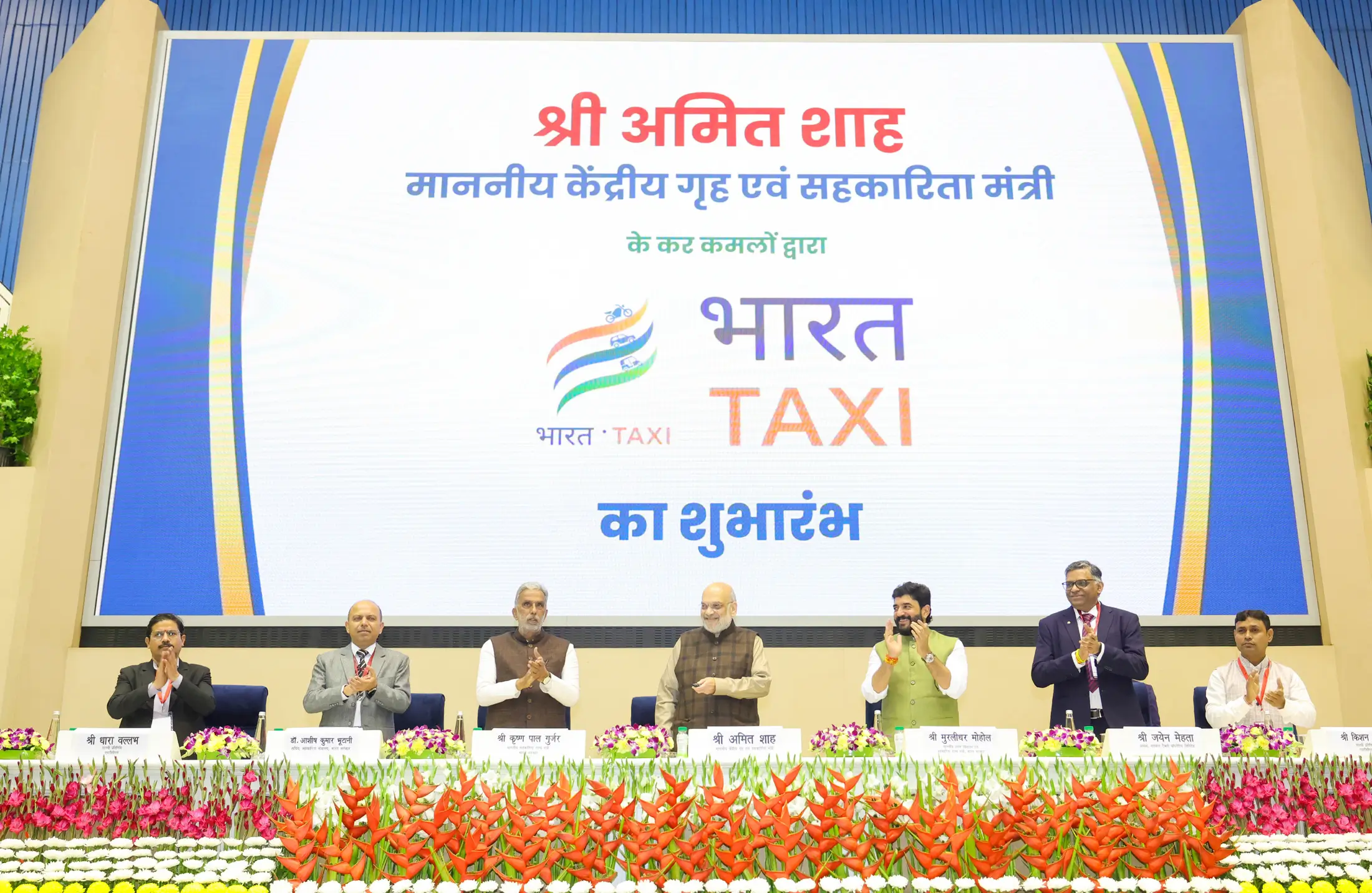
The official launch took place in New Delhi on 5 February 2026 and was inaugurated by Union Home and Cooperation Minister Amit Shah. The platform is positioned as a public-interest mobility service rather than a profit-driven technology company.
Cooperative Ownership and the Role of Drivers
At the centre of bharat taxi is the idea that drivers should control their own earnings and working conditions. Drivers are known as “Sarathis,” meaning charioteers, and each Sarathi is a member of the cooperative.
This model means that drivers are stakeholders instead of gig workers. All fare earnings go directly to them. Bharat Taxi does not charge any commission and does not apply surge pricing during peak hours. Drivers are also free to work with other platforms if they choose.
The cooperative structure allows drivers to benefit from social security measures such as health insurance, accident coverage, and retirement-related support. These benefits are linked to long-term participation rather than daily performance targets.
Pilot Phase and Early Response
Before the national launch, bharat taxi was tested through pilot operations lasting around two months. These pilots were conducted in the Delhi-NCR region and parts of Gujarat.
During this period, more than three lakh drivers registered as Sarathis. The app also attracted over one lakh users. On average, more than 10,000 rides were completed daily, and approximately ₹10 crore was distributed directly to drivers without any deductions.
These early figures helped the cooperative assess operational challenges and user response before expanding further.
Services Available on Bharat Taxi
Bharat Taxi supports multiple types of transport to suit different travel needs. Users can book cars, three-wheelers such as autos, and two-wheelers including bike taxis.
Key service features include transparent pricing, verified ride data, and emergency support systems. The absence of surge pricing is intended to provide predictable fares for passengers while ensuring stable earnings for drivers.
The platform aims to balance affordability for users with financial security for drivers.
Expansion Plans Across India
According to statements made at the launch event, bharat taxi plans to expand nationwide over the next two to three years. The goal is to operate across all states and Union Territories, covering both urban and rural areas.
The cooperative leadership has said the platform intends to grow steadily rather than aggressively, focusing on sustainable driver participation and reliable service quality.
How Bharat Taxi Differs From Private Ride-Hailing Apps
The key difference lies in ownership and revenue sharing. While private aggregators typically charge commissions from drivers, bharat taxi allows drivers to keep their full fare.
There is no surge pricing, and drivers can earn dividends as cooperative members. Industry analysts suggest that although the platform may not immediately replace established apps, it introduces competition that could influence pricing and earnings standards across the sector.
Social and Community Initiatives
Bharat Taxi also highlights community participation. During the launch, selected Sarathis received recognition, certificates, and insurance-related benefits.
Special initiatives such as “Bike Didi” aim to encourage women to join as drivers, promoting wider participation in the mobility sector.
Frequently Asked Questions
1. What is Bharat Taxi in simple terms?
Bharat Taxi is a ride-hailing mobile app that allows people to book taxis, autos, and bike rides, similar to other cab apps.
The key difference is that the drivers themselves own the platform through a cooperative model.
This means Bharat Taxi is built to benefit drivers first, while still providing reliable services to passengers.
2. Who operates Bharat Taxi?
Bharat Taxi is operated by Sahakar Taxi Cooperative Limited, a registered cooperative body.
It is supported by several well-known cooperative organisations across India.
The platform works under the rules of the Multi-State Cooperative Societies Act, 2002, which gives it a formal and regulated structure.
3. Does Bharat Taxi charge any commission from drivers?
No, govt. does not take any commission from drivers’ earnings.
Whatever fare a passenger pays goes directly to the driver without deductions.
The platform also avoids surge pricing, so fares remain stable and transparent.
4. Can drivers work on other ride-hailing apps along with Bharat Taxi?
Yes, drivers using Bhart Taxi are free to work on other ride-hailing platforms as well.
There are no exclusivity rules forcing drivers to stay only with Bharat Taxi.
This flexibility allows drivers to choose what works best for their income and schedule.
5. Which types of vehicles are available on Bharat Taxi?
It supports multiple vehicle options to suit different travel needs.
Passengers can book cars for longer or family trips, auto-rickshaws for short city rides, and two-wheelers for quick travel.
This variety helps make the service useful for both daily commuters and occasional travelers.
6. Is Bharat Taxi available across India right now?
Bharat Taxi is currently in the expansion phase and is not yet available everywhere.
Pilot operations were conducted in selected regions, and the platform is gradually growing.
The goal is to expand across all states and Union Territories over the next few years.
7. What does “Sarathi” mean in Bharat Taxi?
Drivers on Bhart Taxi are called “Sarathis,” a word that means charioteer or driver.
The term reflects the idea that drivers are not just workers but owners of the cooperative.
As Sarathis, drivers also receive long-term benefits linked to cooperative membership.
8. How is Bharat Taxi different from private cab apps?
Unlike private ride-hailing companies, this Taxi service is not designed to maximize corporate profit.
Drivers are members of the cooperative and can benefit from shared ownership and future returns.
The absence of commission and surge pricing makes it a distinct alternative in the mobility sector.
9. Does Bharat Taxi provide any social security benefits to drivers?
Yes, B Taxi includes social security features for registered drivers.
These may include health insurance, accident coverage, and retirement-related support.
Such benefits are meant to offer financial safety beyond daily earnings.
10. Why was Bharat Taxi launched?
It was launched to create a fair and driver-focused ride-hailing system.
It aims to address concerns related to commissions, income instability, and lack of ownership in gig work.
The platform promotes cooperative values while using modern digital technology.
Conclusion
Bharat Taxi represents a cooperative-based approach to ride-hailing in India. By focusing on driver ownership, zero commission, and regulated pricing, the platform offers an alternative model in the mobility sector. Its long-term success will depend on how effectively it scales while maintaining its cooperative principles.
All information has been cross-checked across multiple national media outlets and official government communication channels to ensure 100% factual accuracy as of February 5, 2026.