The FIFA World Cup is the most powerful and influential tournament in world football. Organized by FIFA, it is held every four years and determines the global champion among national teams. Since its first edition in 1930, the World Cup has grown from a modest international competition into the most watched sporting event on Earth. It represents more than football. It represents identity, pride, politics, culture, emotion, and legacy. Billions of viewers watch every edition. Entire nations pause when their team plays. Careers are defined in a single match. Generations remember one moment for a lifetime.
Let’s dive deep into the world’s greatest football competition.
- History of the FIFA World Cup (1930–2026)
- The Golden Era (1950–1970)
- The Modern Competitive Era (1974–1994)
- The Globalization of the World Cup (1998–2014)
- The New Generation (2018–2022)
- Complete FIFA World Cup Winners List (1930–2022)
- Evolution of the Tournament Format
- The FIFA World Cup Trophy
- Why the World Cup Is Different
- Complete FIFA World Cup Winners List (1930–2022)
- Golden Boot Winners (Top Scorers List)
- Tactical Evolution of the World Cup
- Biggest Upsets in FIFA World Cup History
- Economic & Financial Impact
- Viewership & Global Reach
- Major Controversies
- 2026 FIFA World Cup Expansion (Detailed Preview)
- Europe vs South America – Historical Dominance
- Future of the FIFA World Cup
- Why the FIFA World Cup Remains the Greatest Sporting Event
- Frequently Asked Questions (SEO Optimized)
- Final Conclusion: The Legacy That Defines Football
The FIFA World Cup is just one chapter in the global sports story. From tournament breakdowns and player career analysis to record books and upcoming event previews, there’s much more to explore.
👉 Visit our Sports section for deeper insights, stats, and expert coverage across major competitions.
History of the FIFA World Cup (1930–2026)
The Beginning – 1930
The first FIFA World Cup took place in 1930 in Uruguay. At that time, international travel was difficult, so only 13 teams participated, and there were no qualification rounds. Uruguay not only hosted the event but also defeated Argentina 4–2 in the final to become the first world champions. The tournament was played at the historic Estadio Centenario in Montevideo, and although the event was small by modern standards, it laid the foundation for what would become the most important competition in global sport.
1934 & 1938 – Italy’s Early Dominance
Italy hosted in 1934 and won. They defended their title in 1938.
The second and third tournaments, in 1934 and 1938, were won by Italy. Those editions reflected the political tensions of Europe at the time, yet tactically they showed the growing sophistication of European football. After 1938, the world descended into World War II, and the 1942 and 1946 World Cups were cancelled. When the tournament returned in 1950 in Brazil, it carried enormous symbolic weight. The 1950 event is remembered for the “Maracanazo,” when Uruguay shocked Brazil in front of nearly 200,000 fans at the Maracanã Stadium. Brazil needed only a draw to win the title but lost 2–1. The defeat remains one of the most painful moments in Brazilian sporting history.
The Golden Era (1950–1970)
The 1950s and 1960s are often described as the golden era of attacking football. The 1954 World Cup in Switzerland saw West Germany defeat the heavily favored Hungarian team in what became known as the “Miracle of Bern.” Hungary had been unbeaten for years, yet Germany’s tactical discipline prevailed. In 1958, a 17-year-old named Pelé stunned the world by leading Brazil to victory in Sweden. His creativity, composure, and scoring ability transformed him into a global icon. Brazil defended their title in 1962 and later won again in 1970, becoming the first nation to secure three World Cup trophies. The 1970 Brazilian side is widely regarded as one of the greatest teams ever assembled, combining technical skill, attacking flair, and tactical intelligence. Brazil remains the most successful nation in World Cup history with five titles (1958, 1962, 1970, 1994, 2002). Their influence on global football culture is immense, from creative dribbling styles to attacking formations.
In 1966, England hosted and won the tournament for the first and only time. The final against West Germany featured a controversial goal that is still debated today. England’s triumph remains a defining national sporting memory.
The Modern Competitive Era (1974–1994)
Total Football
The 1970s introduced tactical innovation. The Netherlands popularized “Total Football,” a fluid system in which players could interchange positions seamlessly. Although the Dutch reached the 1974 final, West Germany won the tournament. In 1978, Argentina won their first World Cup on home soil. That tournament, however, was overshadowed by political controversy during Argentina’s military dictatorship.
1982 – 1986, Italy’s Third Title to The Maradona World Cup
The 1982 World Cup in Spain saw Italy claim their third title. But it was the 1986 tournament in Mexico that became forever linked to one individual: Diego Maradona. His “Hand of God” goal and his extraordinary solo goal against England in the quarterfinal are two of the most iconic moments in football history. Argentina won the final against West Germany, and Maradona’s legacy as one of the greatest players of all time was cemented.
1990 – Defensive Football Era
The 1990 World Cup was characterized by defensive football and fewer goals, but West Germany lifted the trophy. In 1994, the tournament expanded its global reach by being hosted in the United States, significantly increasing football’s popularity in North America. Brazil won their fourth title in a dramatic penalty shootout against Italy.
The Globalization of the World Cup (1998–2014)
The 1998 World Cup in France marked another turning point. It expanded to 32 teams, allowing broader global representation. France defeated Brazil in the final to win their first title. The 2002 edition, co-hosted by Japan and South Korea, was the first World Cup held in Asia. Brazil won again, securing their fifth championship. In 2006, Italy defeated France in a final remembered for Zinedine Zidane’s infamous headbutt inciden
2002 – First World Cup in Asia
Hosted by Japan and South Korea, this tournament saw Brazil win their fifth title — still a record.
2006 – Italy’s Comeback
Italy defeated France in a dramatic final remembered for Zinedine Zidane’s headbutt incident.
2010 – Spain’s Tiki-Taka Era
In 2010, Spain won their first World Cup in South Africa, becoming the first European team to win outside Europe. Spain’s possession-based “tiki-taka” style emphasized short passing and positional control.
2014 – Germany’s Tactical Masterclass
Germany defeated Argentina in the final.
They also defeated Brazil 7–1 in the semifinal — one of the most shocking results in World Cup history.
The New Generation (2018–2022)
2018 – France Returns
France won their second World Cup in Russia, showcasing young talent and tactical discipline.
2022 – Messi Completes Football
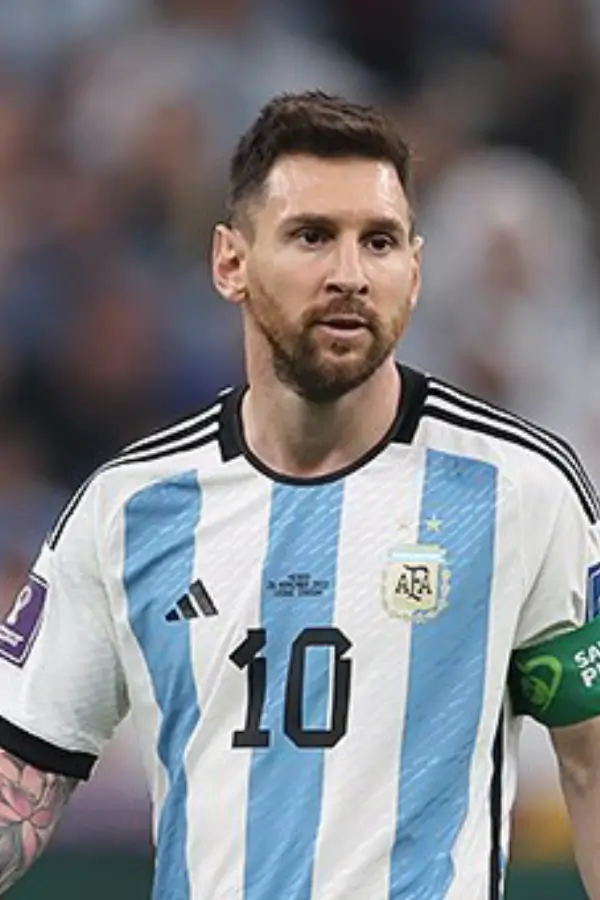
The 2022 FIFA World Cup delivered one of the greatest finals ever played. Lionel Messi led Argentina to victory over France in a dramatic penalty shootout after a 3–3 draw. For Messi, the triumph completed his career, adding the only major trophy that had eluded him.
For many fans, this was the perfect ending to an era.
Complete FIFA World Cup Winners List (1930–2022)
| Nation | Titles |
|---|---|
| Brazil | 5 |
| Germany | 4 |
| Italy | 4 |
| Argentina | 3 |
| France | 2 |
| Uruguay | 2 |
| England | 1 |
| Spain | 1 |
South America and Europe have dominated historically.
Evolution of the Tournament Format
The World Cup format evolved significantly:
- 1930: 13 teams
- 1954: 16 teams
- 1982: 24 teams
- 1998–2022: 32 teams
- 2026: 48 teams
The tournament now includes:
- Qualification rounds (6 continental confederations)
- Group stage
- Knockout stage
- Final
This structure ensures global representation while maintaining elite competition.
The FIFA World Cup Trophy
The current trophy was introduced in 1974.
It weighs 6.1 kilograms and is made of 18-carat gold.
It is one of the most recognizable trophies in sports.
Why the World Cup Is Different
Unlike club football, where players represent cities or companies, the World Cup represents nations.
It carries:
- National pride
- Cultural identity
- Historical significance
When a country wins, generations remember it.
Qualification Process
Over 200 national teams compete in continental qualifiers:
- Europe (UEFA)
- South America (CONMEBOL)
- Africa (CAF)
- Asia (AFC)
- North America (CONCACAF)
- Oceania (OFC)
Only 32 teams qualified (until 2022).
Complete FIFA World Cup Winners List (1930–2022)
| Year | Host | Winner | Runner-Up |
|---|---|---|---|
| 1930 | Uruguay | Uruguay | Argentina |
| 1934 | Italy | Italy | Czechoslovakia |
| 1938 | France | Italy | Hungary |
| 1950 | Brazil | Uruguay | Brazil |
| 1954 | Switzerland | West Germany | Hungary |
| 1958 | Sweden | Brazil | Sweden |
| 1962 | Chile | Brazil | Czechoslovakia |
| 1966 | England | England | West Germany |
| 1970 | Mexico | Brazil | Italy |
| 1974 | West Germany | West Germany | Netherlands |
| 1978 | Argentina | Argentina | Netherlands |
| 1982 | Spain | Italy | West Germany |
| 1986 | Mexico | Argentina | West Germany |
| 1990 | Italy | West Germany | Argentina |
| 1994 | USA | Brazil | Italy |
| 1998 | France | France | Brazil |
| 2002 | Korea/Japan | Brazil | Germany |
| 2006 | Germany | Italy | France |
| 2010 | South Africa | Spain | Netherlands |
| 2014 | Brazil | Germany | Argentina |
| 2018 | Russia | France | Croatia |
| 2022 | Qatar | Argentina | France |
All-Time FIFA World Cup Records (Detailed Analysis)
Most Goals in World Cup History
Miroslav Klose – 16 Goals
He surpassed Ronaldo Nazário’s previous record in 2014.
Most Goals in a Single Tournament
Just Fontaine – 13 Goals (1958)
This record has stood for more than six decades.
Most World Cup Appearances (Matches Played)
Lothar Matthäus – 25 Matches
Most World Cup Titles by a Player
Pelé – 3 Titles (1958, 1962, 1970)
No player has matched this achievement.
Youngest World Cup Winner
Pelé – 17 years old (1958)
Oldest Goal Scorer
Roger Milla (Cameroon) – 42 years old (1994)
Biggest Win in World Cup History
Hungary 10–1 El Salvador (1982)
Fastest Goal in World Cup History
Hakan Şükür (Turkey) – 11 seconds (2002)
Golden Boot Winners (Top Scorers List)
The Golden Boot is awarded to the top scorer of each tournament, while the Golden Ball recognizes the best overall player. The Golden Glove honors the best goalkeeper. These awards often elevate players to global superstardom.
Some notable winners:
- 1970 – Gerd Müller (10 goals)
- 1986 – Gary Lineker (6 goals)
- 1994 – Hristo Stoichkov (6 goals)
- 2002 – Ronaldo Nazário (8 goals)
- 2010 – Thomas Müller (5 goals)
- 2014 – James Rodríguez (6 goals)
- 2018 – Harry Kane (6 goals)
- 2022 – Kylian Mbappé (8 goals)
These players often become global stars overnight.
Tactical Evolution of the World Cup
Football tactics have evolved significantly across decades.
1950s–60s: Classic 4-2-4 Attacking Systems
Brazil’s attacking dominance relied on fluid forwards and creative midfielders.
1970s: Total Football
The Netherlands introduced positional flexibility.
Players interchanged roles constantly.
1990s: Defensive Organization
Compact formations like 4-4-2 became dominant.
2010: Tiki-Taka Era
Spain’s possession-based passing game redefined modern football.
2014–2022: High Press & Athletic Football
Modern teams combine:
- High pressing
- Fast transitions
- Tactical flexibility
- Data-driven strategy
The World Cup reflects the tactical trends of each era.
Biggest Upsets in FIFA World Cup History
World Cups are known for shocking results.
1950 – USA Defeats England
England were heavy favorites. The USA shocked them 1–0.
2002 – South Korea Reaches Semi-Final
As co-hosts, they stunned Italy and Spain.
2014 – Germany 7–1 Brazil
One of the most shocking matches ever.
2022 – Saudi Arabia Defeats Argentina
2022 FIFA World Cup produced one of the biggest upsets in history during the group stage.
Economic & Financial Impact
The FIFA World Cup generates billions in global revenue.
Revenue streams include:
- Broadcasting rights
- Sponsorships
- Ticket sales
- Merchandising
Recent tournaments generated over $6 billion in revenue for FIFA.
Host nations invest heavily in:
- Stadium infrastructure
- Transportation
- Tourism promotion
For example:
2018 FIFA World Cup boosted tourism significantly in Russia.
Similarly, the 2022 tournament increased Qatar’s global visibility.
Viewership & Global Reach
The World Cup is the most watched sporting event globally.
- Billions watch the final
- Over 200 countries broadcast the tournament
- Massive social media engagement
The 2022 final broke digital streaming records.
Major Controversies
Controversies have also accompanied the World Cup. Political issues, hosting debates, and the introduction of Video Assistant Referee (VAR) have sparked discussion among fans and analysts. Despite debates, the tournament’s popularity continues to grow.
Political Influence
Some tournaments faced political scrutiny due to host nation issues.
Hosting Debates
2022 FIFA World Cup sparked global debates on labor conditions.
VAR Controversy
Video Assistant Referee (VAR) was introduced to reduce errors.
2026 FIFA World Cup Expansion (Detailed Preview)
Over time, the tournament format has evolved significantly. The first edition had 13 teams. It expanded to 16 teams in 1954, 24 teams in 1982, and 32 teams from 1998 to 2022. Beginning with the 2026 FIFA World Cup, the competition will expand to 48 teams. The 2026 edition will be jointly hosted by United States, Canada, and Mexico, marking the first time three countries host together and the first expansion beyond 32 teams.
Key Changes:
- 48 teams
- More group stage matches
- Greater continental representation
- Increased revenue
This expansion will allow more nations from Africa and Asia to participate.
Europe vs South America – Historical Dominance
World Cup titles:
- Europe – 12+
- South America – 10+
No other continent has won the men’s World Cup.
This dominance highlights tactical and developmental strength in these regions.
Future of the FIFA World Cup
Looking ahead:
- Expansion beyond 48 teams?
- Increased technology integration
- Climate-friendly tournaments
- More global rotation of hosts
Football continues evolving.
Why the FIFA World Cup Remains the Greatest Sporting Event
Unlike club competitions, the World Cup represents nations.
It unites:
- Families
- Generations
- Entire countries
It creates:
- Heroes
- National legends
- Cultural memories
The emotional weight of representing a nation makes the World Cup unique.
Frequently Asked Questions (SEO Optimized)
How often is the FIFA World Cup held?
Every four years.
Which country has won the most World Cups?
Brazil with five titles.
Who scored the most goals in World Cup history?
Miroslav Klose (16 goals).
Where will the 2026 World Cup be held?
United States, Canada, and Mexico.
How many teams will participate in 2026?
48 teams.
What is the prize money for winning the World Cup?
The prize money varies each tournament but reaches hundreds of millions distributed among teams.
Final Conclusion: The Legacy That Defines Football
For nearly a century, the FIFA World Cup has stood as the ultimate stage of international football. From the historic first tournament in 1930 to the dramatic modern finals watched by billions, it has consistently delivered moments that define generations. Legends have been born, dynasties have risen and fallen, and nations have found unity in victory and dignity in defeat.
What makes the World Cup truly special is not just the trophy, the records, or the statistics. It is the emotion behind every match. It is the sight of a captain lifting the golden trophy while millions celebrate at home. It is the heartbreak of a missed penalty, the roar of a last-minute goal, and the pride of representing an entire country on the world’s biggest stage.
Over the decades, the tournament has evolved — expanding teams, introducing new technology, and reaching new continents — yet its essence remains unchanged. It is still about excellence, courage, strategy, and belief. The upcoming 2026 expansion marks a new chapter, promising broader global participation and even greater drama, but the spirit of competition will remain the same.
The FIFA World Cup is more than a sporting event. It is a cultural phenomenon, a global festival, and a shared human experience. When it begins, borders fade, rivalries ignite, and the entire planet turns its attention to one ball and one dream.
And as history has shown time and again, in the World Cup, anything is possible — and that is exactly why the world keeps watching.