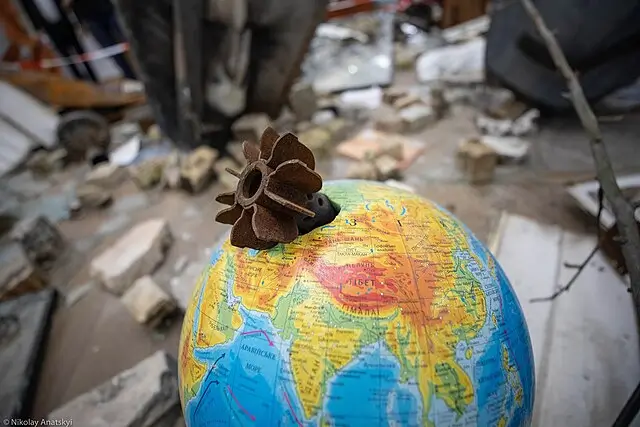
“International conflicts are often the final stage of political failure. When dialogue weakens, fears outweigh cooperation.”
The breakdown of relations between states is rarely sudden. It is marked by small decisions, unresolved disputes, and growing suspicion—until cooperation becomes impossible.
The Russia–Ukraine War did not begin suddenly in February 2022, and it did not happen because of one single event. It is the result of long-standing disagreements about power, security, history, and Ukraine’s right to choose its own future.
- Ukraine After 1991: Independence With Complications
- Russia’s View: Influence, Security, and History
- Ukraine’s Turn Toward Europe
- 2013–2014: Protests and a Change of Government
- Russia–Ukraine conflict | Crimea: The First Territorial Break
- Russia–Ukraine War: Fighting in Eastern Ukraine (2014–2021)
- NATO Expansion: The Central Dispute
- Russia’s Stated Reasons for War
- February 24, 2022: Full-Scale Invasion
- International Law and Accountability
- Global Impact Beyond Ukraine
- 2024–2026: A War Without Resolution
- Current situation: January 2026
- What is actually happening on the ground
- On the battlefield, fighting continues but territory is changing very slowly
- Peace talks: still talking, not agreeing
- Civilians are still suffering the most
- The growing human cost
- Conclusion
- Disclaimer
For years, tensions were building quietly through political pressure, military moves, and unresolved conflicts. When diplomacy failed and trust collapsed, war became the outcome. This article explains, step by step and in simple terms, how and why the conflict started, what kept it going, and why it still has no clear end.
Ukraine After 1991: Independence With Complications
When the Soviet Union collapsed in 1991, Ukraine became an independent country. This independence was internationally recognized, including by Russia. However, independence did not mean a clean break.
Ukraine remained closely tied to Russia in several ways:
- Trade and energy supply
- Military infrastructure
- Language, culture, and family connections
At the same time, Ukraine wanted to operate as a fully sovereign state. That meant making its own political decisions and choosing its international partners. Over time, this difference in expectations created tension between Kyiv and Moscow.
Russia’s View: Influence, Security, and History
Russia has long viewed Ukraine as strategically important. It is located between Russia and Central Europe, has access to the Black Sea, and shares a long border with Russia.
Many Russian leaders believed that losing influence over Ukraine would weaken Russia’s regional power and security. This belief was shaped by:
- The expansion of Western institutions after the Cold War
- NATO moving closer to Russia’s borders
- A sense that Russia’s role in Europe was being reduced
These concerns did not automatically lead to war, but they shaped how Russia reacted to every major political change inside Ukraine.
Ukraine’s Turn Toward Europe
Growing Interest in the European Union
From the early 2000s, Ukraine increasingly looked toward the European Union. Many Ukrainians associated the EU with better governance, stronger laws, and economic opportunity.
This shift was gradual and uneven. Different governments in Ukraine moved closer to Europe at different speeds. Still, the overall direction became clearer over time.
NATO and the Security Question
Ukraine also began cooperating more closely with NATO. While Ukraine was not offered membership, joint exercises and political dialogue increased.
For Russia, this was a red line. Russian officials argued that North Atlantic Treaty Organization (NATO) was a military alliance originally created to counter Soviet power and that its presence near Russia’s borders was a direct threat.
2013–2014: Protests and a Change of Government
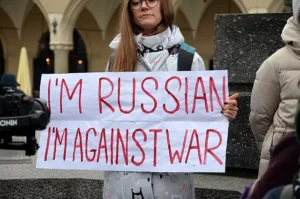
In late 2013, Ukraine’s government suspended plans to deepen ties with the EU. This decision triggered large protests across the country. Protesters demanded closer integration with Europe and an end to corruption.
By early 2014:
- The president left the country
- Parliament supported a new political direction
- A more pro-Western leadership took office
Ukraine described these events as a popular movement. Russia described them as a Western-supported political takeover. This disagreement marked a serious break in relations.
Russia–Ukraine conflict | Crimea: The First Territorial Break
Why Crimea Mattered
Crimea is strategically important. It hosts Russia’s Black Sea naval base and provides access to key maritime routes. Shortly after the change of government in Kyiv, Russian forces entered Crimea.
Russia organized a referendum and declared Crimea part of its territory.
International Response
Ukraine rejected the annexation. So did the United Nations and most countries, stating that borders cannot be changed by force.
This event changed the situation fundamentally. From that point onward, the conflict was no longer just political—it had become territorial and military.
Russia–Ukraine War: Fighting in Eastern Ukraine (2014–2021)
After Crimea, armed conflict began in eastern Ukraine, particularly in Donetsk and Luhansk. Armed groups opposed to Kyiv took control of parts of these regions.
Russia denied direct involvement but supported these groups politically and militarily, according to Western governments and international investigations.
Between 2014 and 2021:
- More than 14,000 people were killed
- Several ceasefires were agreed and broken
- The conflict remained unresolved
Although the fighting was less visible internationally, the war had already begun in practical terms.
NATO Expansion: The Central Dispute
Throughout these years, Ukraine continued seeking closer cooperation with NATO. Russia demanded written guarantees that Ukraine would never join the alliance.
NATO refused, arguing that:
- Each country has the right to choose its alliances
- No external power can veto that choice
This disagreement remained unresolved and became one of the key triggers leading to the full-scale war.
Russia’s Stated Reasons for War
Russian leadership presented several arguments:
- Ukraine was becoming a military threat
- Russian-speaking communities needed protection
- Ukraine historically belonged in Russia’s sphere
Ukraine, the UN, and most countries rejected these claims. They stated that none of these reasons justified military invasion under international law.
February 24, 2022: Full-Scale Invasion
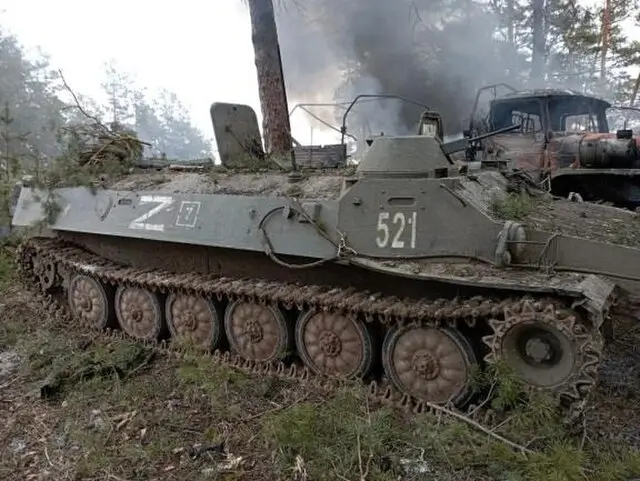
On 24 February 2022, Russia launched a full-scale invasion of Ukraine from the north, east, and south.
Russia described the invasion as self-defense. Ukraine and the international community described it as an unprovoked violation of international law.
This moment is universally recognized as the start of the current phase of the war.
Russia–Ukraine War: Northern Withdrawal
By March 2022, Russian forces withdrew from northern Ukraine after failing to capture Kyiv, marking an early turning point in the Russia–Ukraine war. In towns such as Bucha, evidence of civilian killings was uncovered following the withdrawal, leading to international investigations into alleged war crimes linked to the Russia–Ukraine conflict..
Russia–Ukraine War: Shift to the East and South
The war shifted to eastern and southern Ukraine. Russia captured several cities after long artillery battles, causing heavy destruction.
Russia–Ukraine War: Ukrainian Counteroffensives
In late 2022, Ukraine launched a successful counteroffensive in the Kharkiv region, reclaiming large areas of territory.
Russia–Ukraine War: Annexation Attempts
Russia announced the annexation of four Ukrainian regions after holding referendums in occupied areas, a move that marked a significant escalation in the Russia–Ukraine war. The United Nations General Assembly overwhelmingly rejected the annexation claims, declaring them illegal and invalid under international law.
International Law and Accountability
In March 2023, the International Criminal Court issued arrest warrants for Russian President Vladimir Putin and another official over the unlawful transfer of Ukrainian children.
This was the first time such action was taken against a leader of a permanent UN Security Council member.
Global Impact Beyond Ukraine
Food and Energy
Russia’s withdrawal from the Black Sea Grain Initiative marked another escalation in the Russia–Ukraine war, disrupting Ukrainian food exports and contributing to higher global food prices, particularly in parts of Africa and the Middle East.
Economic Damage
Millions of Ukrainians were displaced. Infrastructure across the country was heavily damaged. The World Bank estimates reconstruction costs at over $500 billion.
Nuclear Safety
The International Atomic Energy Agency continues monitoring the Zaporizhzhia nuclear power plant due to ongoing safety risks.
2024–2026: A War Without Resolution
As of early 2026:
- Fighting continues without a comprehensive ceasefire
- Sanctions on Russia remain in place
- Ukraine continues to receive international support
The longer the war lasts, the greater the humanitarian, economic, and political costs become.
Current situation: January 2026
A short pause during extreme winter
In the last week of January 2026, talk of a temporary pause in attacks brought a small sense of relief to Ukraine’s cities.
On 29 January 2026, U.S. President Donald Trump said that Russian President Vladimir Putin had agreed to halt attacks on Kyiv and other major cities for one week, mainly because of extreme winter conditions.
Ukrainian President Volodymyr Zelenskyy welcomed the idea, saying any reduction in attacks could help civilians survive freezing temperatures and repair damaged power systems.
However, Russia has not officially confirmed this pause. Because of that, Ukrainian authorities are treating it as a fragile and uncertain break, not a formal ceasefire.
What is actually happening on the ground
As of 30 January 2026, the war has not stopped.
While some areas have seen fewer large missile strikes, drone and artillery attacks are still being reported in several regions. Cities away from Kyiv continue to face danger, especially near the front lines and along the southern coast.
In places like Odesa, recent attacks have damaged homes and injured civilians, including children. Emergency services remain under pressure, especially at night when temperatures drop sharply.
For ordinary people, daily life still means:
- Unstable electricity and heating
- Nights spent in shelters
- Schools and workplaces closing without notice
- Constant fear of sudden strikes
The winter cold has made every disruption more dangerous
On the battlefield, fighting continues but territory is changing very slowly
Military assessments show Russian forces advancing only 15 to 70 metres per day in some areas. This is extremely slow by modern standards and even slower than many offensives during World War I.
The reasons are straightforward:
- Strong Ukrainian defensive positions
- Heavy use of drones by both sides
- High losses of soldiers and equipment
- Difficult winter terrain
This is no longer a fast-moving war. It has become a long struggle where both sides lose heavily for very small gains.
Peace talks: still talking, not agreeing
Diplomatic efforts are ongoing, but progress remains limited.
Russia has invited Zelenskyy to Moscow for talks, but Ukraine has not responded publicly. Ukrainian leaders remain cautious, saying talks must come with real security guarantees.
At the same time, U.S.-supported discussions have taken place in neutral locations such as Abu Dhabi. These talks are meant to explore possible paths toward ending the war.
The main disagreement remains unchanged:
- Ukraine wants strong international security guarantees before discussing territory
- Russia has rejected those guarantees
Because of this, talks continue without clear results.
Civilians are still suffering the most
Even with talk of a pause, civilians remain the biggest victims.
Repeated strikes on energy facilities have left many areas without stable heating during one of the coldest periods of the year. Hospitals rely on backup power, and repair crews work under constant threat.
Humanitarian workers warn that winter has turned infrastructure damage into a life-threatening issue, especially for children, the elderly, and people living near the front lines.
The growing human cost
The war’s human toll continues to rise.
Current estimates suggest that combined military casualties on both sides could soon approach two million. Russia is believed to have suffered particularly heavy losses, though exact numbers are difficult to confirm.
Beyond soldiers, millions of civilians have been displaced, families remain separated, and entire communities have been permanently changed.
Conclusion
The Russia–Ukraine war did not begin with a single event, nor has it continued because of one simple cause. It is the result of years of political failure, broken trust, and unresolved disputes over security, influence, and sovereignty. When diplomacy weakened and fear replaced cooperation, war became the outcome.
As of early 2026, the conflict remains unresolved. Front lines move slowly, peace talks stall, and civilians continue to pay the highest price—enduring displacement, winter hardships, and constant uncertainty. Neither side has achieved a decisive victory, but the human, economic, and global costs keep rising.
This war has reshaped international politics and exposed the limits of global institutions in preventing prolonged conflict. Its central lesson is clear: without credible dialogue, mutual security guarantees, and respect for international law, wars do not simply end—they fade into long, grinding tragedies whose consequences last far beyond the battlefield.
Disclaimer
This article is based on information available in the public domain and multiple credible sources. It is published strictly for informational and educational purposes and does not intend to express any political, ideological, or personal opinion of The Viral Issues or its editorial team.”